Flying Scotsman
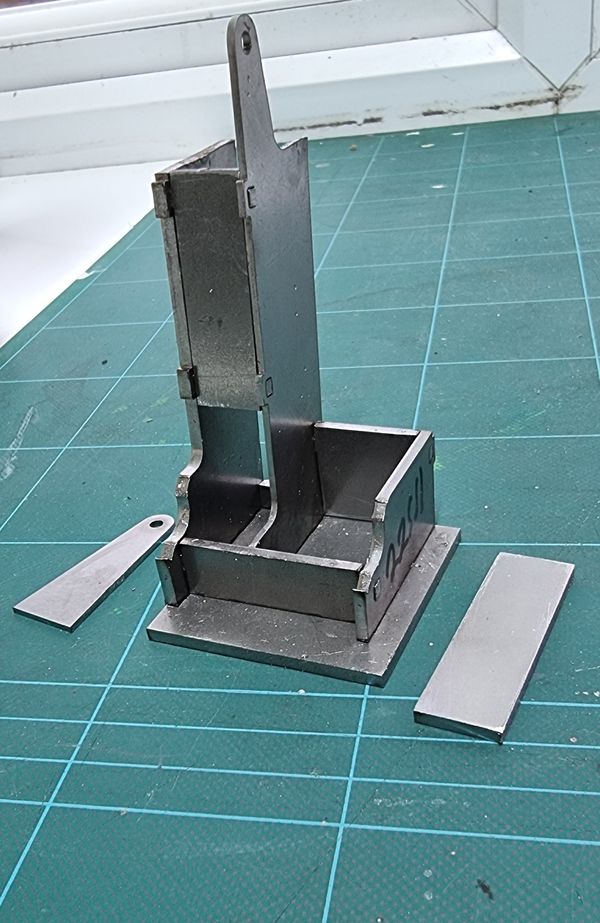
REVERSER: Part 1
Yes, I'm back on the loco, It's hard to believe that the last time I worked on the loco itself was June 2022. The workshop still has some way to go but internally I have half of it powered and it's warm with a
Flying Scotsman
Yes, I'm back on the loco, It's hard to believe that the last time I worked on the loco itself was June 2022. The workshop still has some way to go but internally I have half of it powered and it's warm with a
Flying Scotsman
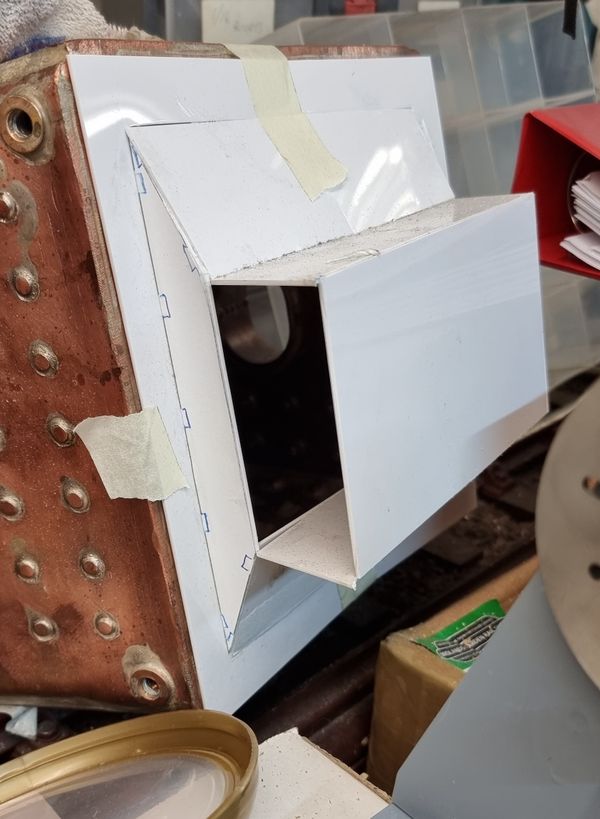
The ashpan is one of those parts that need to be made to fit both the area between the frames and the shape of the foundation ring, Don says as much but also says that if all other parts are to the drawing then what he has drawn should be
Flying Scotsman
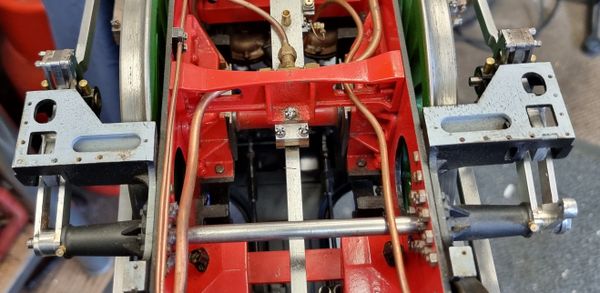
This entry sees the completion of the radius rods, the lifting arms and the sliding blocks connecting the two. I have to say that i have been making up these various components and only when assembling has been done did I appreciate how there is no room for error here,
Flying Scotsman
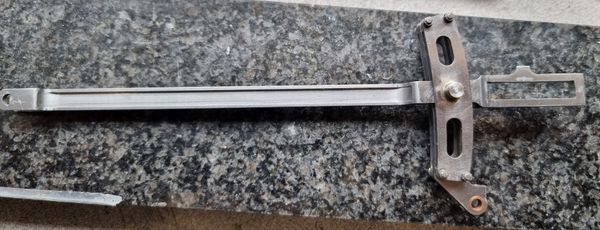
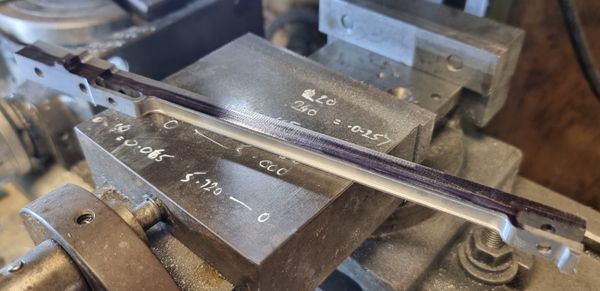
With the front face finished it was then time to machine the backs, I mentioned before that I would make a decision on whether to flute the backs later, I have now decided not to do this. The main reason being that with the offset following full size and not
Flying Scotsman
It was now time to create a lot of swarf, I guess there can be a number of ways to tackle this, this is how I did it with the tools to hand. The trusty heavy jig comes back into play with new holes drilled/tapped to match the required

Flying Scotsman
Although these are a pretty simple part to machine from solid there will be a good few different set-ups involved, plus added complications of changing the design to be more prototypical, so I best get on. As per usual we begin with Don's drawing, it's
Flying Scotsman
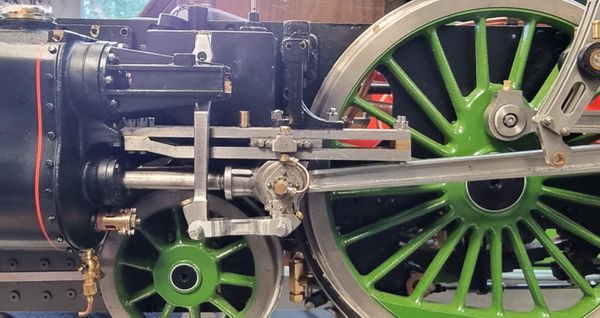
Once these are made and fitted I'll for the first time have the 2:1 conjugated valve gear working, exciting times ahead. The union links are pretty straightforward machining but I'll cover them anyway to keep the build complete. I'll begin with the drawing
Flying Scotsman
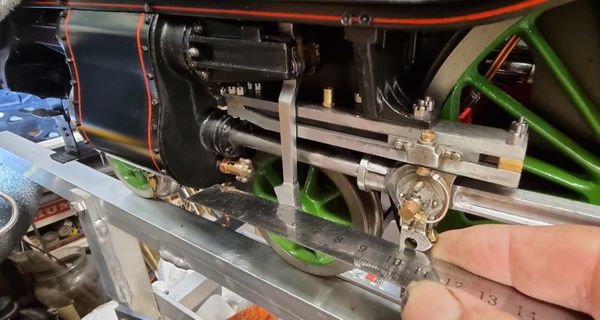
Today I begin some of the more interesting parts to the motion, I say 'interesting' in as far as they take a little more thought in the setup. There aren't many more parts of the motion to make but those that are left bar the union
Flying Scotsman
A good working steam locomotive needs to be set up balanced on it’s axles for best tractive effort, something that I have been working on for my model of 4472 in 5" gauge. Before building the weighbridge I studied how locomotives were weighed during the golden era of
Flying Scotsman
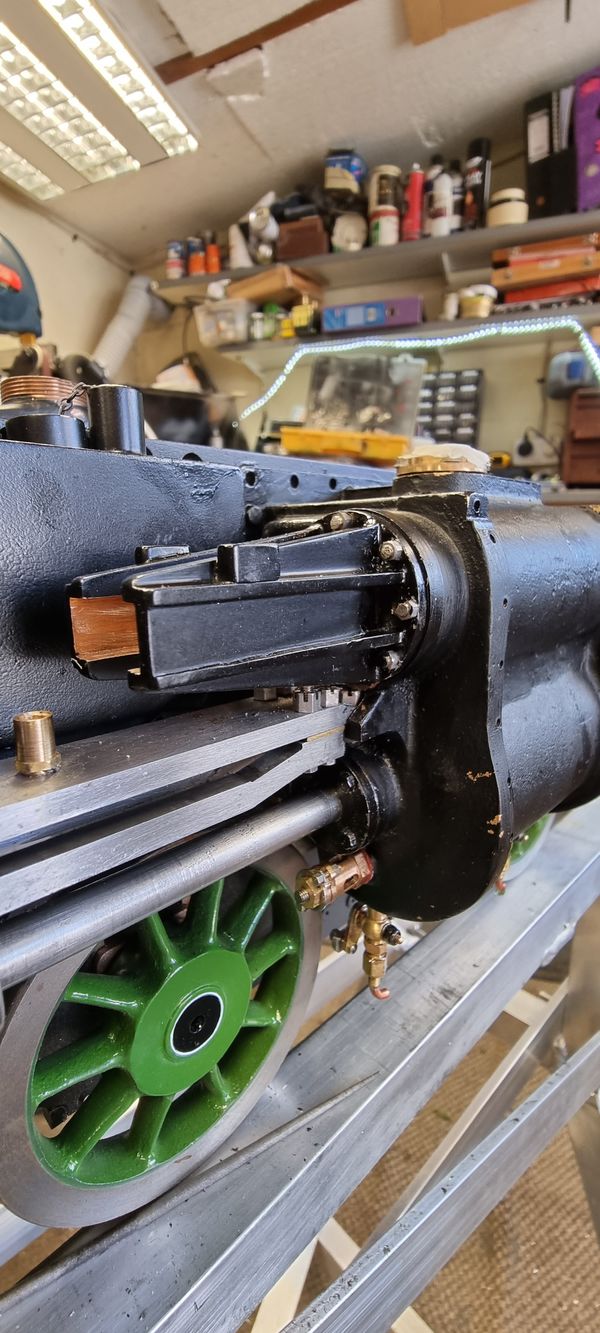
I decided that now was a good time to revisit the valves to finish off the spindles and fit their crossheads. 2 each for the left and right cylinders but only one crosshead for the front of the middle cylinder, a rear isn't needed due to the 2;
Flying Scotsman
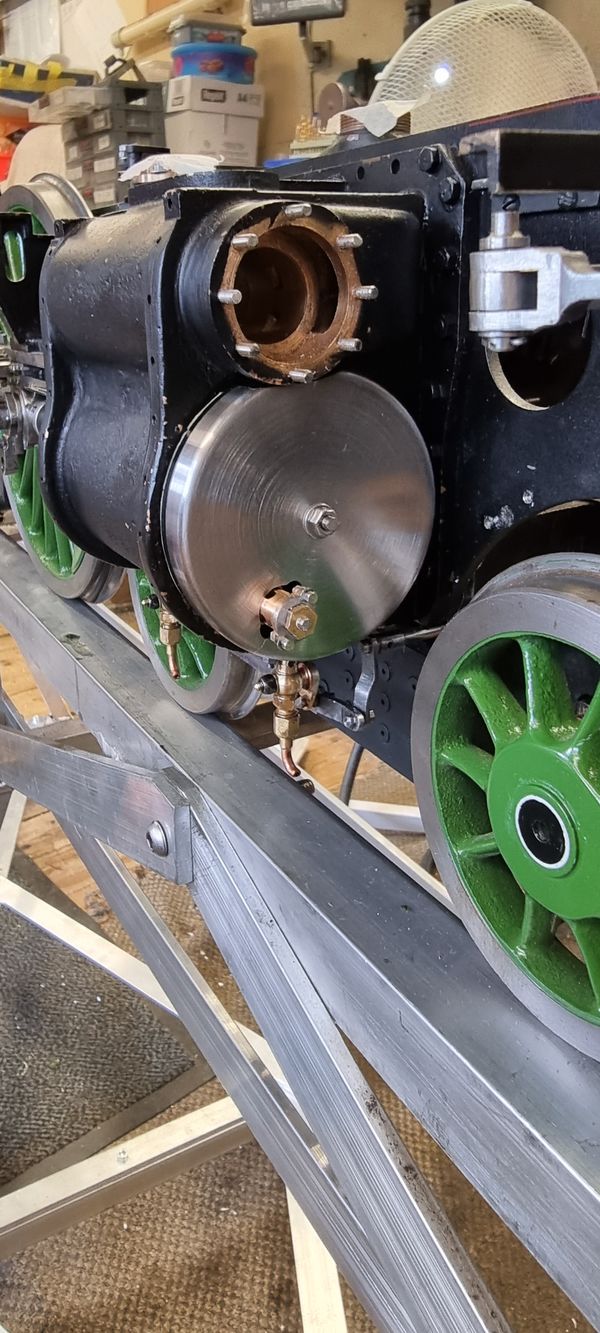
I have a fair bit to cover in this entry, so here goes... First up is making the gaskets for the cylinder covers, Don states to fit these dry, I can't see any reason for this as there's plenty of room for gasket material, in this
Flying Scotsman
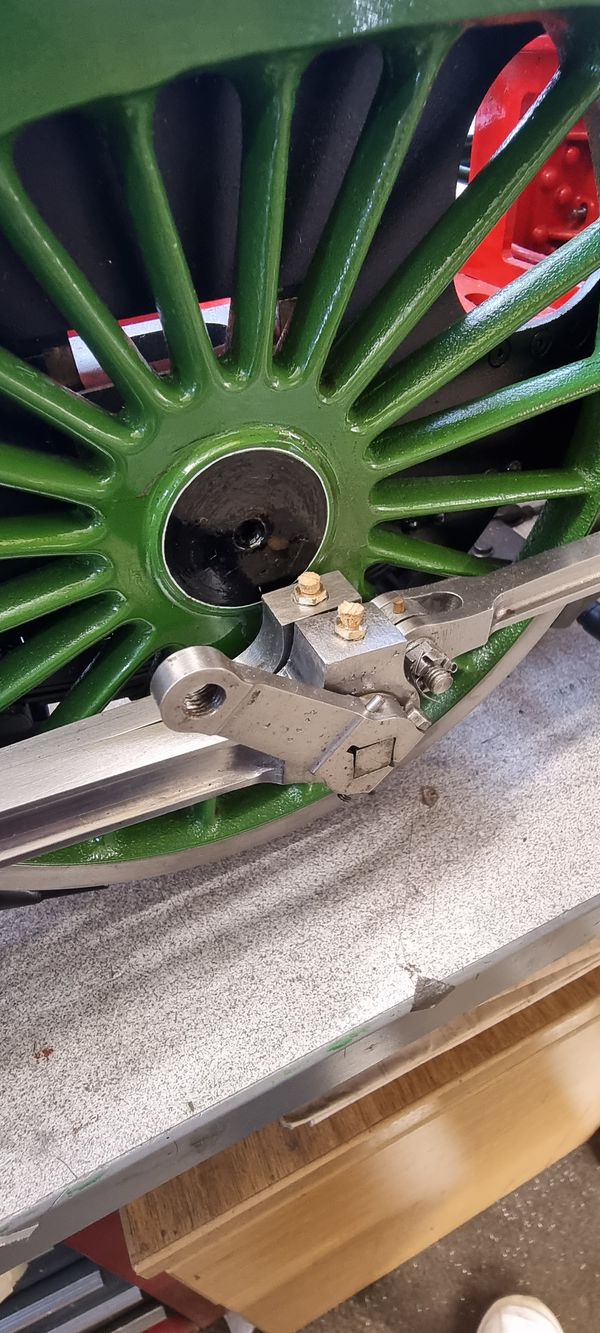
I have revisited the coupling/connecting rod oiling pots, they are the same design but the material has been changed from steel to brass. I had tried to find bronze 3/16 hex which would be as per prototype but after a few weeks searching in vain I have settled